After a car accident, the police report becomes one of the most important documents you’ll have. It’s an independent, official account of what happened, and it plays a major role in how your personal injury claim gets valued, both by insurance adjusters and, if necessary, in court. Here’s what to know about getting your report, understanding what’s in it, and why having an attorney review it matters.
Why an Attorney Should Review It Before You Talk to Insurance
A crash report is only one piece of a personal injury claim, but it’s often the piece that determines how the rest of the process goes. An experienced attorney knows how to read a report the way an adjuster will, catch language that could be used against you, and push back when the narrative doesn’t line up with the evidence.
At Atlanta Metro Personal Injury Law Group, we build cases around getting our clients the compensation they’re actually owed, not just a fast settlement. Because we work on a 25% flat contingency fee rather than the 33.33% many firms charge, more of that settlement stays in your pocket. And because there’s no upfront cost, getting an experienced legal team reviewing your report and handling communication with the insurance company costs you nothing to start.
The Role Your Report Plays in a Personal Injury Claim
Insurance adjusters aren’t in the business of taking anyone’s word for what happened in a crash. What they rely on instead is documentation, and the accident report is usually the first and most influential piece of it. It was created by a responding officer with no personal stake in the outcome, which gives it real weight when it comes to establishing fault.
A well-documented report that clearly points to the other driver’s negligence can put you in a much stronger position to negotiate a fair settlement. On the other hand, a report with gaps, vague language, or outright errors can be used by an insurance company to shift blame or minimize what they offer you. This is one of the biggest reasons injury victims choose to have a personal injury attorney review their report before engaging with an adjuster at all.
Requesting Your Georgia Accident Report
Georgia doesn’t send you a copy automatically, so you’ll need to request one from whichever agency responded to your crash:
- BuyCrash.com is the quickest route for most people, since it’s the online records portal used by many Georgia police departments and the state patrol. You’ll need your last name, the date of the crash, and either your report number, VIN, or driver’s license number.
- Georgia Department of Transportation (GDOT) processes reports for crashes that happened on state highways and roadways, typically through a mailed request.
- Georgia Department of Public Safety (GA DPS) handles reports when the Georgia State Patrol was the responding agency, and requests can be submitted through an Open Records request.
Chasing down the right agency while you’re also dealing with injuries, missed work, and medical appointments is a lot to juggle. It’s the kind of task our personal injury attorneys can take off your plate the moment you reach out.
Breaking Down What’s in the Report
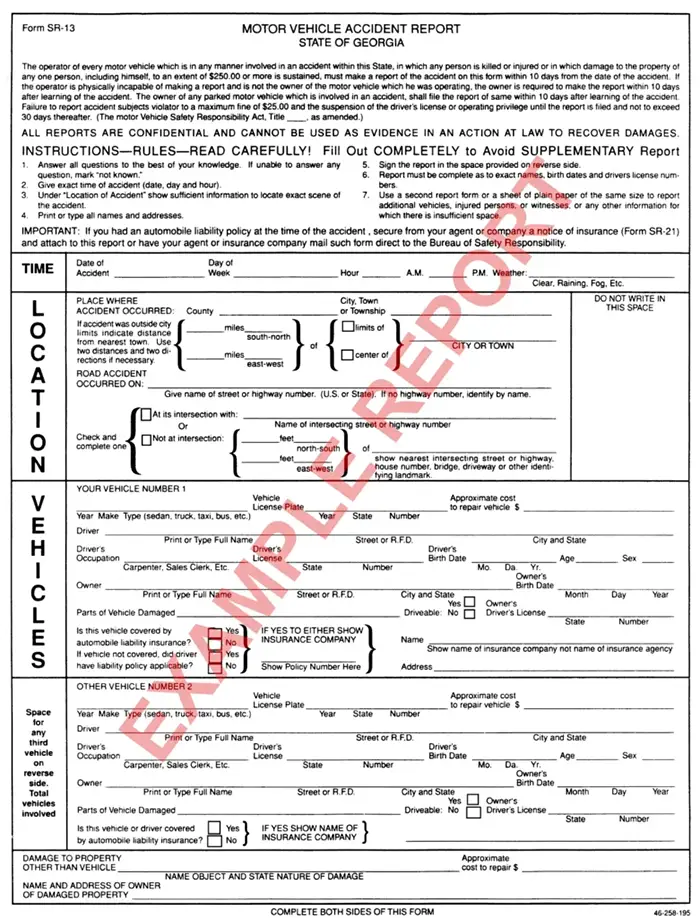
Georgia crash reports generally include the same core categories of information, though formatting can vary slightly between agencies:
- Basic crash details. The date, time, location, and a report number you’ll want to hold onto for every future conversation about your claim.
- Conditions at the time of the crash. Weather, visibility, and road surface conditions, which can end up mattering quite a bit when it comes to arguing whether a driver’s speed or following distance was reasonable.
- Driver, vehicle, and insurance information. Names, license numbers, VINs, plate numbers, and insurance details for every vehicle involved.
- A diagram of the collision. A basic drawing showing vehicle positions, direction of travel, and point of impact.
- Officer’s narrative and contributing factors. Notes on what the officer believes caused the crash, whether that’s following too closely, a failure to yield, or distraction, along with a short written account of what was observed or reported at the scene.
- Any citations issued. Tickets or charges written up as a result of the crash.
Don’t Assume the Report Is Error-Free
Reports get written quickly, often at a chaotic scene, and small mistakes are common. It’s worth checking your report for:
- Incorrect dates, times, or locations
- Wrong VINs, license plate numbers, or insurance information
- Misspelled names or bad contact details for anyone involved
- A fault narrative that doesn’t match what you remember happening
- Witness statements that are missing or inaccurately recorded
If you spot an error, you can request a correction directly from the agency that produced the report. Supporting documentation, like your own photos or a witness’s contact information, strengthens your request.
Let Us Review Your Report for You
If you were hurt in a Georgia car accident, don’t wait to have your accident report reviewed by someone who knows what to look for. Contact Atlanta Metro Personal Injury Law Group today at 678-752-4582 for a free, no-obligation case review, and let us start building your claim the right way.